Commissions
Some pieces begin with a vision. Others begin with a conversation.
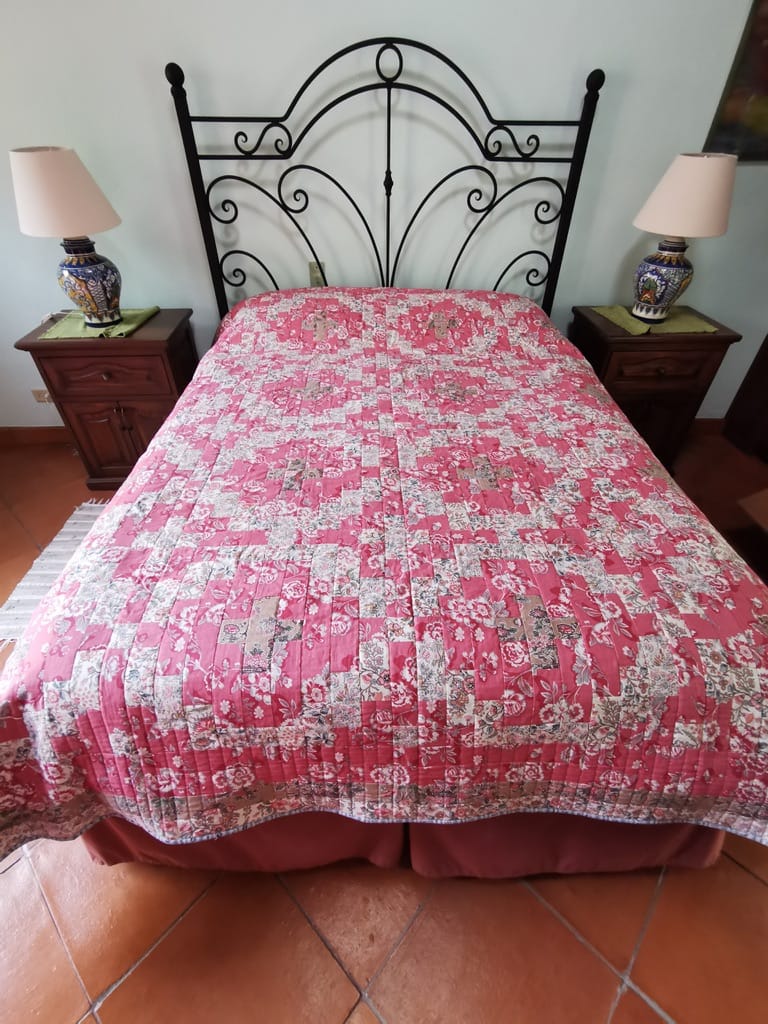
Every commission begins with a conversation.
This quilt was created for a client who wanted something personal, colourful and entirely at home in her space. We explored colour, pattern and scale together before the design began to take shape.
From the first cut of fabric to the final quilting, the piece evolved through the making process — allowing the design to become something that was both uniquely hers and unmistakably mine.
The brief
The client is a published author of intelligent fiction who lives in a country cottage in the UK and has an association with roses. Her brief was for something that would make a statement on the bed, fit naturally into the country-cottage setting and look as though it belonged there. She wanted a colour range of pinky peach. We discussed size and how the piece would be used, and then the rest was pretty much left up to me.
Once I had located fabrics that I thought would be perfect, I sent images to the client for approval. She approved them, I ordered the fabrics, and I set to work.
The fabric story
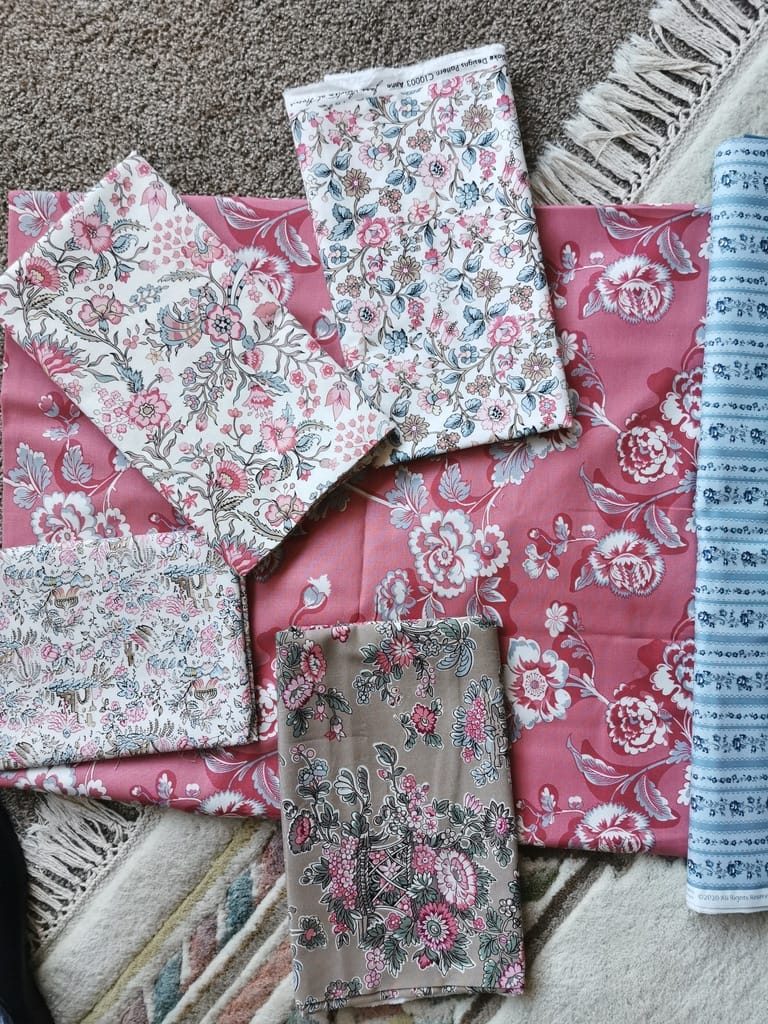
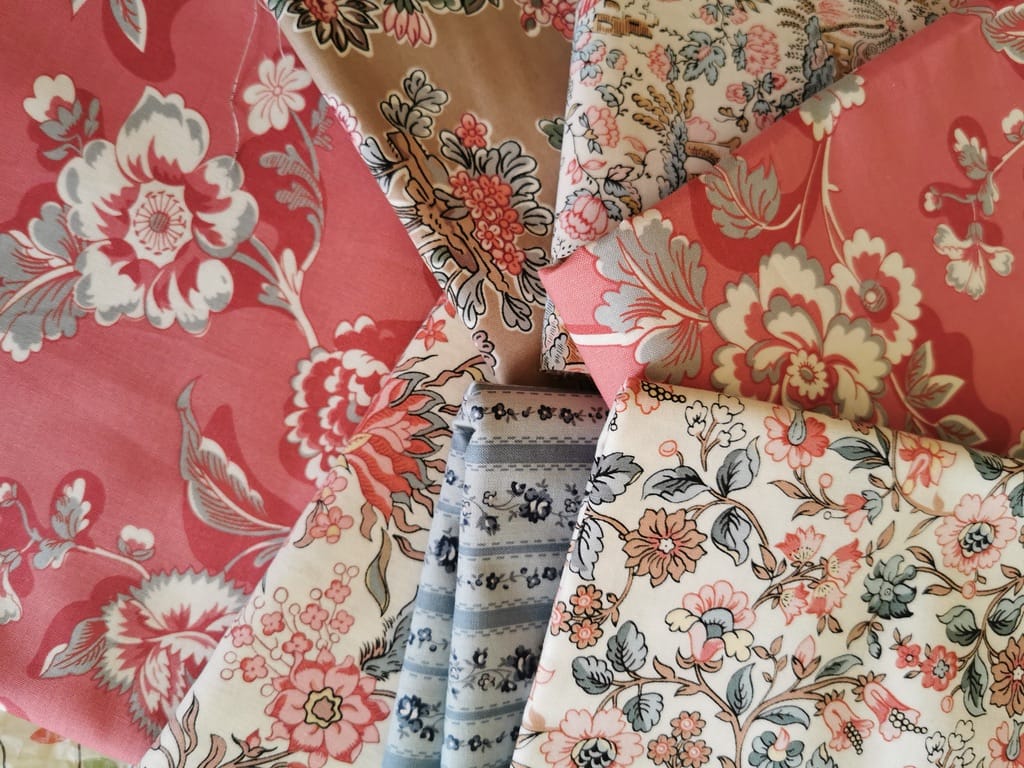
The fabric collection I had found was a facsimile of fabrics from Jane Austen's home. The literary connection was delicious, but even better, the florals — named after Jane Austen's characters — were perfect for the country-cottage brief.
The design I had seen was a commercial design called Rose Cottage by Deb Grogan of The Quilt Factory, and its country lattice of florals gave me the starting point. But the collection was already a year old, so finding enough of the fabrics in the colours we wanted was not straightforward. I eventually tracked down two suppliers who still had stock, and decisions about which fabrics would play which role in the final design were partly dictated by what I could actually find.
The making begins
Once I had the fabrics, we could really start to play. The blue striped fabric was not actually part of the Jane Austen collection, but it was made by the same manufacturer, in a colourway that was an exact match.
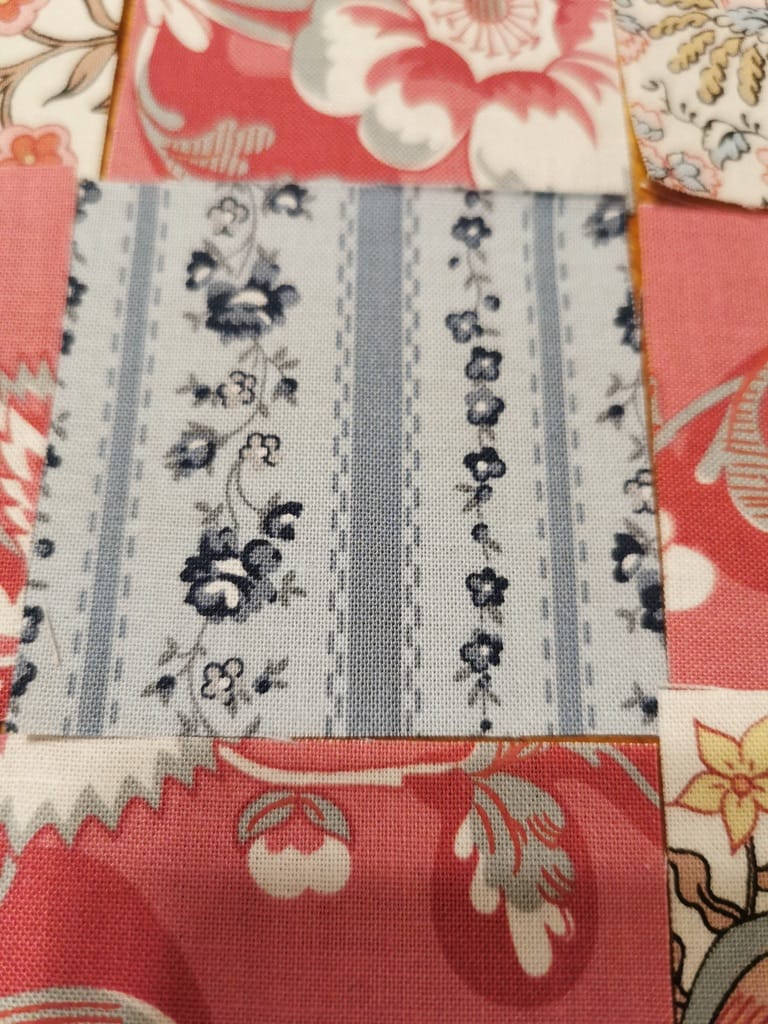
As you can see from my playful tests, the stripe was simply too dominant to use as a centrepiece for the lattice. I also had a very pretty pale blue from the collection. It looked fine digitally, but when I saw it alongside the other fabrics in real life, it just didn't work.
That's why it is so important to keep checking at every stage that everything is working harmoniously — and artistically — together.
The design takes shape
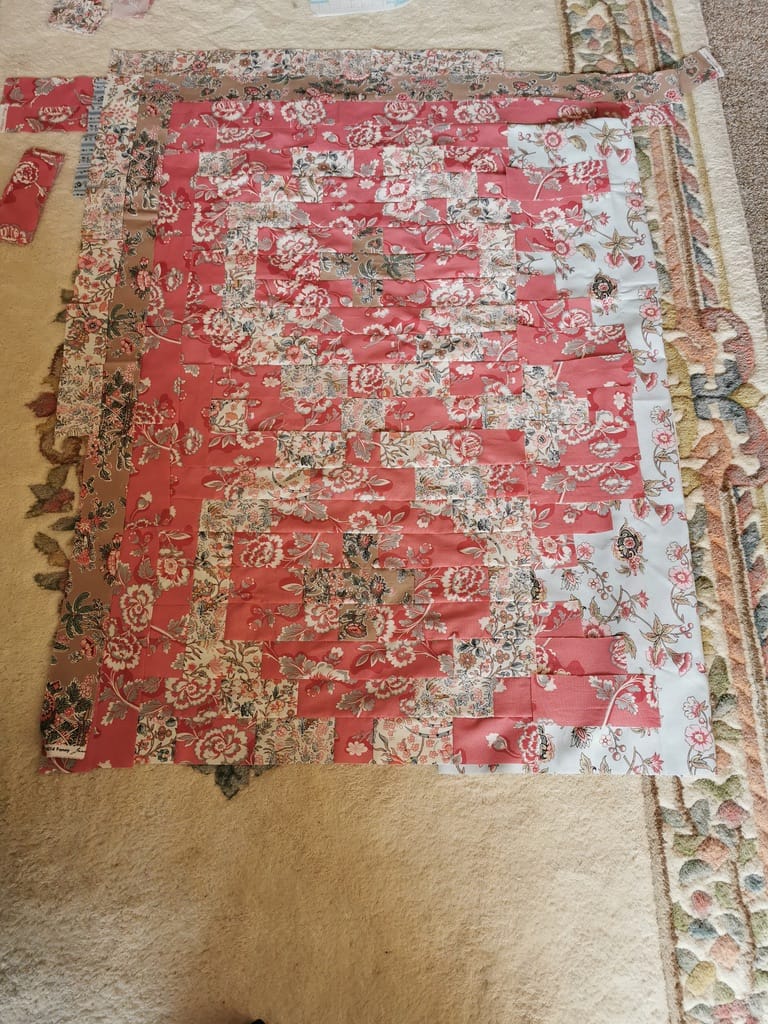
As I started to build the blocks together, line by line, I was still checking — making sure the colours and patterns were working together as the design developed.
At this stage I was also comparing contrasting fabrics to decide what would make a suitable border. The original commercial pattern had no border; the design simply stopped at the edges. I wanted to give the piece a little more visual weight and create an edging that felt more finished.
The finishing touch
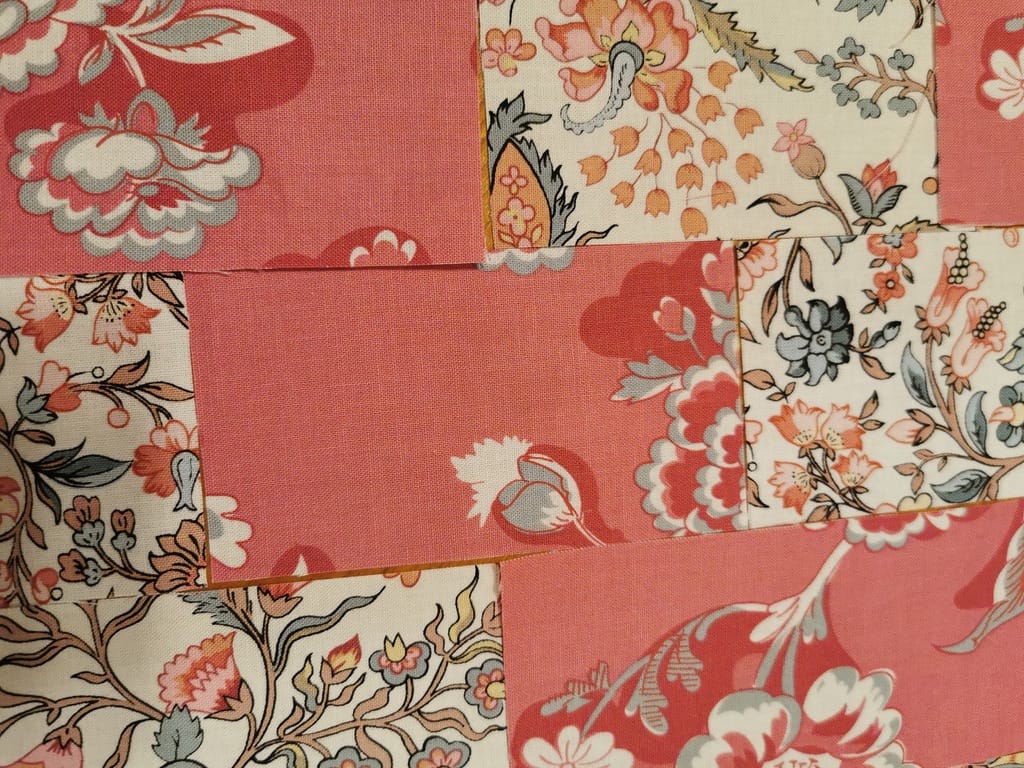
I always keep a working test piece of a quilt so I can try out the quilting before committing to the finished piece. I had imagined free-motion quilting centred in the lattice spaces, but once I started working on it, it simply didn't look right. So I changed direction and developed a much more geometric quilting design.
That decision had an unexpected benefit. It allowed me to create a heavily quilted border, giving the finished piece more body and weight and helping it drape beautifully over the bed.
Presenting a finished commission to its client is always a little nerve-wracking. But she loved it — and was so thrilled that she wrote to me afterwards to tell me again.
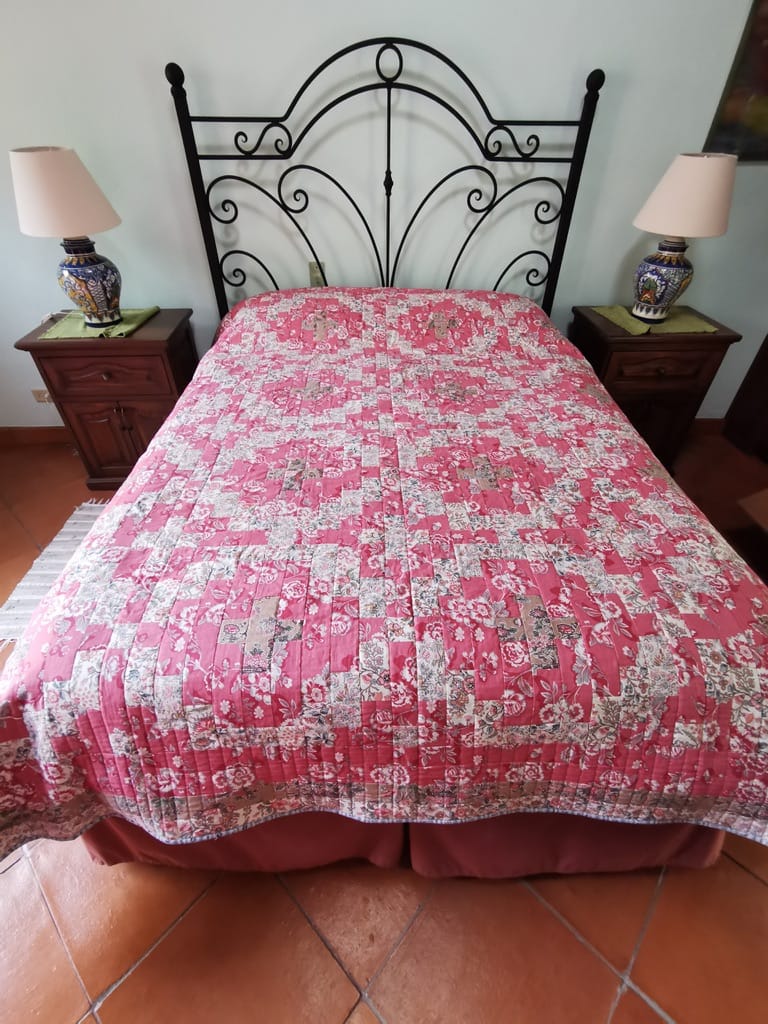
For me, that's the joy of the process: taking a piece of raw, albeit gorgeous, fabric and turning it into something utterly unique, beautiful and functional. Something to love and live with.
Interested in commissioning a piece?